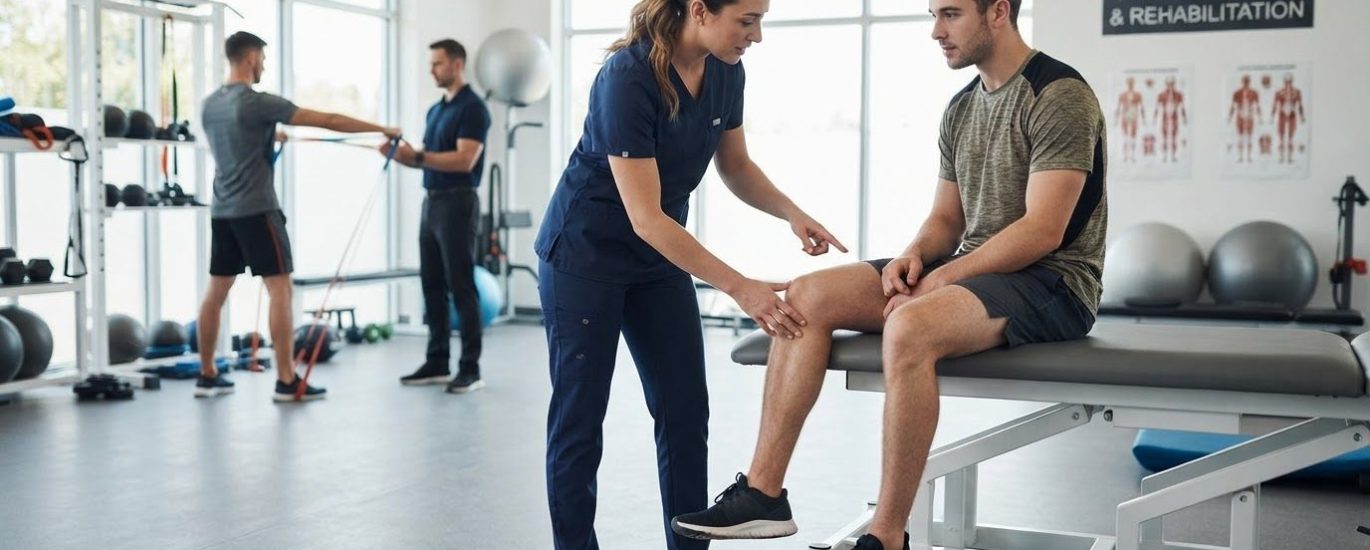
Sports Injury Clinic: What to Expect & How to Choose
Pain after a workout is not automatically a serious injury. A little soreness that improves with rest is different from a swollen joint, a popping sensation, or pain that changes how you walk. The difficult part is knowing when self-care has run its course and when an assessment would prevent a small problem from becoming a long interruption.
A Sports injury clinic is typically a starting point for active people who need an injury evaluated, not simply pushed through. Depending on the clinic, care may involve movement testing, rehabilitation, medical assessment, imaging, or referral to another specialist when the problem requires it.
In Lombard, True Health Chiropractic and Acupuncture describes an evidence-based approach that examines movement, compensation, strength, mobility, and control. Its sports injury care addresses problems including ankle sprains, runner’s knee, rotator cuff injuries, tennis elbow, shin splints, IT band syndrome, plantar fasciitis, and muscle strains.
Start with the decision: urgent care, a clinic, or rest?
The right destination depends less on the name of the facility than on the injury’s severity.
Seek emergency care first when there are warning signs
A sports injury clinic is not a substitute for emergency treatment. Go to an emergency department or seek urgent medical help for signs such as:
- A visibly deformed limb or joint.
- Inability to bear weight after a significant injury.
- Severe swelling that develops rapidly.
- Loss of feeling, unusual weakness, or a limb that looks pale or blue.
- Chest pain, trouble breathing, fainting, or a head injury with worsening confusion, repeated vomiting, or loss of consciousness.
- Neck or back trauma accompanied by neurological symptoms.
These situations can involve fractures, dislocations, serious ligament damage, internal bleeding, or neurological injury. Do not try to “test it out” by returning to play.
A clinic is often appropriate for non-emergency problems
A sports injury clinic may be suitable when pain is limiting activity but there is no obvious emergency. That includes a knee that hurts during running, recurring ankle instability, shoulder pain with lifting, elbow pain from gripping, or shin pain that keeps returning.
It is also a reasonable option for an injury that seemed minor but is not improving. Continuing to train through altered movement often shifts stress to another area. A clinician can help distinguish ordinary post-exercise soreness from a strain, tendon problem, joint irritation, or a condition requiring further evaluation.
Rest is not always the same as recovery
Short-term rest can calm irritated tissue. It does not necessarily restore the strength, balance, coordination, or movement habits that contributed to the problem. Returning to the same activity at the same intensity without rebuilding those qualities is one reason injuries recur.
That does not mean every ache needs treatment. If discomfort is mild, steadily improving, and absent during ordinary movement, a gradual reduction in training load may be sensible. If the pain persists, worsens, or repeatedly returns, an assessment is more useful than guessing.
What a good first appointment should accomplish
The first visit should produce more than a vague label such as “overuse.”
A careful assessment usually begins with the history:
- What activity triggered the pain?
- Did it begin suddenly or build gradually?
- Is there swelling, bruising, weakness, stiffness, or instability?
- What movements aggravate it?
- Has the problem happened before?
- Have you changed shoes, training volume, technique, equipment, or recovery habits?
The clinician may then observe walking, balance, joint range of motion, strength, and sport-specific movements. Comparing the painful side with the other side can reveal useful differences, but a movement test does not replace a proper medical evaluation when a serious injury is possible.
True Health says its first visit focuses on hearing the patient’s story, testing movement, explaining what may be happening in plain language, and outlining next steps. That emphasis on clarity matters. Before agreeing to a treatment plan, you should understand what the clinician believes is causing the problem, what remains uncertain, and what would prompt imaging or referral.
The injuries clinics commonly see
Sports injuries are not limited to competitive athletes. Runners, weightlifters, golfers, pickleball players, recreational exercisers, and busy adults can all develop problems when activity exceeds the body’s current capacity.
Overuse injuries
Overuse problems build as repeated loading outpaces recovery. Examples include:
- Plantar fasciitis, often associated with pain beneath the heel.
- Shin splints, which cause pain along the shin and often worsen with running.
- IT band-related pain around the outside of the knee.
- Tennis elbow, involving pain near the outer elbow during gripping or lifting.
- Achilles tendon pain at the back of the ankle.
- Rotator cuff-related shoulder pain with reaching or overhead activity.
The phrase “overuse” does not mean the answer is simply to stop forever. A useful plan usually considers the amount and frequency of loading, technique, strength, mobility, footwear or equipment, and how activity is reintroduced.
Acute injuries
A sudden twist, collision, awkward landing, or forceful contraction may cause an ankle sprain, hamstring pull, shoulder injury, or ligament damage. Swelling, bruising, a popping sound, sudden weakness, or an inability to continue are reasons to arrange prompt evaluation.
Some injuries that feel manageable still need medical assessment. An athlete may be able to walk after a fracture, for example, while a partial tear may initially resemble a less serious strain. Diagnosis based only on pain location is unreliable.
Treatment is usually a process, not a single technique
There is no universal “best” sports injury treatment. Care depends on the diagnosis, irritability of the tissue, activity demands, general health, and whether the goal is walking comfortably, returning to work, or competing.
A rehabilitation plan may include modified activity, progressive strengthening, mobility work, balance training, technique changes, and a staged return to sport. Hands-on treatment or other supportive approaches may help symptoms or movement, but they should fit into a broader plan rather than replace the work of rebuilding capacity.
True Health describes its care as gentle, natural, and personalized, with attention to restoring strength, mobility, and control. Its page also identifies chiropractic and acupuncture as part of the practice’s broader care model. Those approaches are not appropriate for every diagnosis, and outcomes vary. Acupuncture and manual treatment should be discussed with a qualified clinician, particularly if you take blood thinners, have a bleeding disorder, are pregnant, have osteoporosis, or have neurological symptoms.
Medication and surgery are not automatically required, but avoiding them should not become a rigid rule. A suspected fracture, complete tendon rupture, unstable joint, severe ligament injury, or persistent neurological problem may require medical or orthopedic care. A responsible clinic should refer when the problem exceeds its scope.
How to judge whether a clinic fits your needs
The phrase “sports injury clinic” covers different models. Some are physician-led orthopedic practices. Others focus on physical therapy, chiropractic care, athletic training, or multidisciplinary rehabilitation. Ask specific questions before booking:
Who evaluates the injury?
Find out whether your visit will be with a physician, physical therapist, chiropractor, athletic trainer, or another qualified professional. The appropriate provider depends on the problem. A clinic should explain its scope rather than imply that one type of care is suitable for every injury.
What happens if the diagnosis is unclear?
Ask whether the clinic can coordinate imaging or refer you to an orthopedic or medical specialist. This is particularly important if you have substantial swelling, weakness, instability, trauma, or symptoms that do not improve.
How is progress measured?
A useful plan should identify functional goals. “Feeling better” is relevant, but so are practical markers such as walking without a limp, climbing stairs, completing a controlled squat, lifting the arm, or returning to running gradually.
What will you do between visits?
Recovery often depends on the home program and on modifying the activity that caused the problem. Ask how exercises will be progressed, what discomfort is acceptable, which symptoms mean you should stop, and how return to sport will be decided.
Is the plan individualized?
A generic list of stretches may be harmless, but it does not explain why your injury occurred or how your capacity will be rebuilt. True Health says it serves people from Lombard and nearby Chicagoland communities, including Downers Grove, Oakbrook, Glen Ellyn, Wheaton, and Elmhurst, and frames care around each person’s movement and schedule.
Returning to activity without repeating the injury
Pain relief is not the same as readiness for full sport. A sensible return is gradual:
- Resume basic daily movement first.
- Reintroduce low-intensity versions of the sport.
- Increase either duration, intensity, or frequency—not every training demand at once.
- Monitor symptoms during activity and over the following day.
- Keep strengthening and conditioning after pain improves.
Do not use pain medication to conceal symptoms while returning to maximum effort. If swelling returns, movement deteriorates, strength drops, or pain becomes sharper, step back and contact a qualified professional.
The hardest injuries to recover from are not always the most painful on day one. Problems involving major ligaments, tendons, cartilage, bone, or the nervous system can require lengthy rehabilitation, and recovery depends on the exact diagnosis. The practical lesson is simple: persistent or function-limiting pain deserves an explanation, not just a promise to “push through.”
A sports injury clinic should help you answer three questions: what is most likely wrong, what must change now, and what evidence will show that returning to activity is safe. If the clinic cannot answer the first question yet, it should be clear about the uncertainty and the next step.